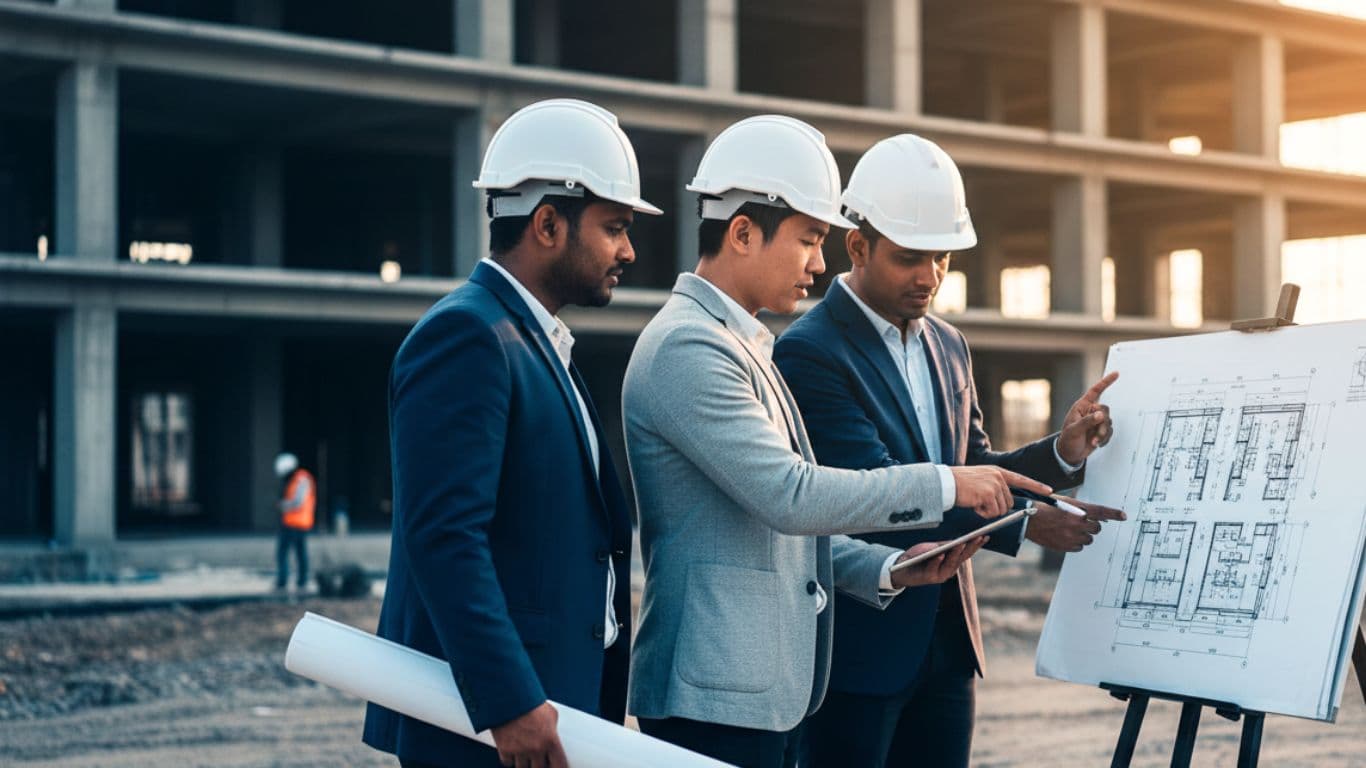
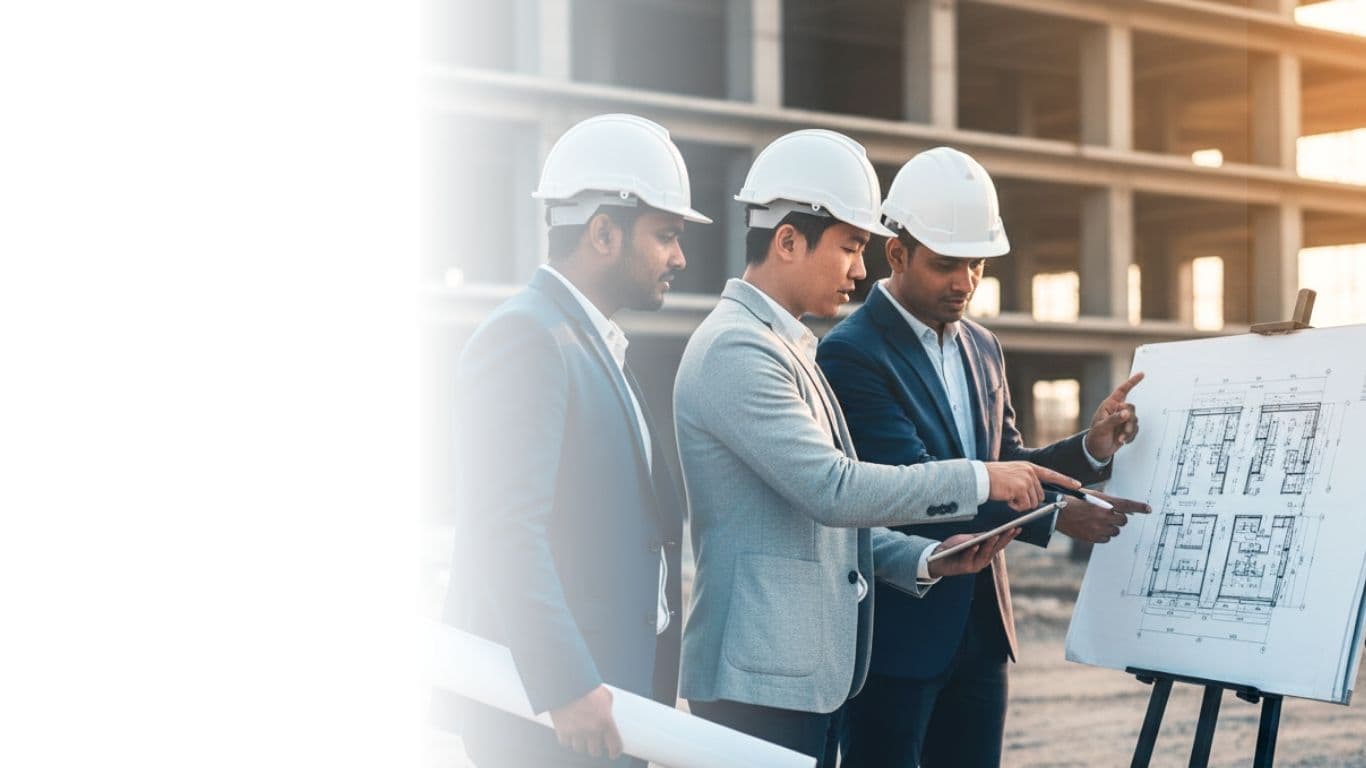
What Does an Engineering Manager Do in Singapore?
An Engineering Manager leads a team of engineers to deliver technical work that meets business goals — combining people leadership, project delivery, technical judgement, and stakeholder management. Across sectors like construction, manufacturing, technology, marine, and facilities, the role sits between strategy and execution: turning company objectives into plans the team can deliver, while growing and retaining engineering talent.
In Singapore's competitive, multicultural talent market, strong engineering managers are in consistent demand. Employers look for leaders who can deliver under pressure, develop people fairly in line with local employment practices, and communicate effectively across diverse, multi-generational teams.
Whether you are a senior engineer stepping into your first management role or an experienced manager moving to a new company, this guide covers the 50 interview questions you are most likely to face — along with sample answers and expert tips you can adapt to your own experience.
How to Use This Guide
This article is structured across 8 key categories that reflect the real competency areas hiring managers assess for engineering leadership roles in Singapore. Personalise the answers with your own examples using the STAR method (Situation, Task, Action, Result).
Section 1: General & Background Questions
1. Can you tell us about your journey into engineering management and what prepared you for this role?
I started as a hands-on engineer, delivering technical work and gradually taking on more ownership — mentoring juniors, leading small projects, and coordinating across teams. Over time I realised I had more impact by enabling a whole team to perform than by being the best individual contributor. That pull towards multiplying impact is what moved me into management. The years of technical delivery gave me credibility with my engineers, while leading projects taught me planning, stakeholder management, and how to keep delivery on track.
2. What do you believe is the core responsibility of an engineering manager?
My core responsibility is to deliver outcomes through a team — not to do the engineering myself, but to make sure the right work gets done well, on time, and by motivated people. That breaks into three things: people (hiring, growing, and retaining good engineers), delivery (planning, prioritising, and removing blockers), and direction (aligning the team's work with business goals). A good engineering manager is the link between strategy at the top and execution on the ground.
3. How is your role as an engineering manager different from that of a senior engineer or technical lead?
A senior engineer or technical lead is measured mainly by the quality and impact of their own technical output and the technical direction they set. As an engineering manager, my success is measured by the performance and growth of the whole team. I spend less time producing work directly and more time on planning, people development, removing obstacles, performance management, and communicating with stakeholders. The technical lead owns the 'how' of the engineering; I own the team's outcomes, health, and capacity to deliver.
4. Why are you interested in this Engineering Manager position?
I'm drawn to this role because it combines the technical domain I enjoy with the leadership work that I find most rewarding — building teams and shipping things that matter. From what I've seen of your company's projects and growth in Singapore, this is a stage where strong engineering management makes a real difference. I want to help a team scale its delivery without losing quality or morale, and your environment looks like the right place to do that.
5. What size of team have you managed, and across what disciplines?
I have managed teams ranging from a handful of engineers up to a department spanning multiple disciplines and functions. I've led mixed teams that included junior and senior engineers, and I've coordinated across adjacent functions such as design, operations, quality, and procurement. Managing across disciplines taught me to lead through clear goals and trust rather than deep expertise in every area — I rely on my specialists and focus on alignment, prioritisation, and removing blockers.
6. How do you balance hands-on technical work with management responsibilities?
As a manager, my first duty is to the team, so management work — unblocking people, planning, reviews, one-to-ones — always takes priority over my own hands-on tasks. I stay technically involved in lower-risk ways: design discussions, reviews, and the occasional non-critical task, so I keep my credibility and judgement sharp. What I avoid is putting myself on the critical path of delivery, because if I become a bottleneck, the team suffers. The goal is to stay close enough to the technical work to lead it well, without competing with my own engineers for the interesting problems.
Section 2: People & Team Leadership
This is often the heaviest section in an Engineering Manager interview. Expect behavioural and situational questions about leading people.
7. How do you build and motivate a high-performing engineering team?
High performance starts with clarity — people need to know what good looks like and why their work matters. I set clear goals, give the team autonomy on how to achieve them, and make sure they have the tools and support to succeed. Motivation comes from a mix of meaningful work, recognition, growth opportunities, and a sense of psychological safety where people can raise problems early. I also protect the team from unnecessary churn and noise so they can focus, and I celebrate wins publicly while handling mistakes as learning opportunities.
8. How do you approach onboarding a new engineer?
I plan onboarding before the person joins — access, equipment, a starter task, and a buddy assigned. In the first week the focus is on people and context: who does what, how the team works, and where to find things, not just the technical setup. I give them a small, real, low-risk piece of work early so they get an early win and learn the process by doing. I check in frequently in the first month and set clear 30-, 60-, and 90-day expectations so both of us know what success looks like.
9. How do you support the career growth and development of your team members?
I start by understanding what each person actually wants — not everyone wants to manage, and some want to go deep technically. From there we build a simple development plan with concrete goals and stretch opportunities aligned to those aspirations. I create growth on the job by handing over ownership of projects, exposing people to stakeholders, and rotating responsibilities. I also support formal upskilling — for example through SkillsFuture-funded courses and certifications — and I make career conversations a regular part of one-to-ones rather than a once-a-year event.
10. How do you delegate effectively without micromanaging?
I delegate the outcome and the context, not a checklist of steps — I explain what success looks like and why it matters, then let the engineer decide how. I match the level of oversight to the person's experience and the risk of the task: more frequent check-ins for someone new or a critical task, lighter touch for a proven performer. I make it clear I'm available if they're stuck, but I resist jumping in to take over. Delegation is also how people grow, so I deliberately hand off work that stretches them, accepting that they may do it differently than I would.
11. How do you handle an underperforming team member?
First I try to understand the root cause through a direct but supportive conversation — is it a skills gap, unclear expectations, a personal issue, or a motivation problem? Then I set clear, specific expectations and a realistic plan with measurable goals and regular check-ins, and I make sure they have the support and resources to improve. I document the conversations and progress fairly and transparently. Most people respond well to clarity and support; if performance still doesn't improve after a genuine opportunity, I escalate through the proper HR process in line with fair employment guidelines.
12. Tell me about a time you had to give difficult feedback to an engineer.
A senior engineer on my team was technically excellent but consistently dismissive of juniors in reviews, which was hurting team morale. I spoke to him privately, gave specific recent examples, and explained the impact on the team rather than labelling him. I framed it as something that was holding back both the team and his own progression into a lead role, and we agreed on concrete changes. He took it well, adjusted his approach, and within a couple of months juniors were actively seeking his input. The key was being direct, specific, and respectful — and following up rather than treating it as a one-off conversation.
13. How do you retain talented engineers in a competitive market like Singapore?
Singapore's engineering talent market is tight, so retention has to be deliberate. Competitive pay matters, but people rarely leave good teams for a small raise — they leave when they stop growing, feel unrecognised, or lose trust in leadership. So I focus on growth opportunities, interesting work, recognition, and a manager relationship where people feel heard. I have regular career conversations to spot dissatisfaction early rather than at the resignation stage, and I advocate internally for fair compensation and promotions. Flexibility and a healthy workload also weigh heavily for engineers here.
14. How do you foster collaboration in a multicultural and multi-generational team?
Singapore teams are diverse in nationality, culture, language, and age, and I treat that as a strength to be harnessed, not a problem to manage. I set shared goals and clear norms for how we communicate and make decisions, so collaboration doesn't depend on everyone having the same background. I'm mindful that communication styles differ — some people are direct, others more reserved — so I create space for quieter voices and don't mistake silence for agreement. I lead inclusively, in line with fair and respectful workplace principles, and I address any bias or exclusion quickly when I see it.
Section 3: Project & Delivery Management
15. How do you plan and scope a new engineering project?
I start with the why — the business objective and what success looks like — before getting into solutions. Then I work with the team to break the work into clear deliverables and milestones, identify dependencies and risks, and produce realistic estimates with the people who'll actually do the work. I define scope explicitly, including what's out of scope, to prevent confusion later. Finally I agree the plan with stakeholders, set up a reporting rhythm, and build in buffer for the unknowns that every engineering project carries.
16. How do you keep projects on schedule and within budget?
Visibility is everything — I maintain a clear view of progress against milestones and budget, and I review it regularly rather than discovering problems at the deadline. I break work into smaller chunks so slippage shows up early, and I track leading indicators, not just final deliverables. When something drifts, I deal with it immediately: re-prioritise, re-sequence, add resources, or renegotiate scope. I also keep stakeholders informed honestly throughout, because surprises are far more damaging than early warnings.
17. What do you do when a project is at risk of missing its deadline?
First I confirm the facts and the root cause rather than reacting to a feeling. Then I look at the levers I can pull: re-sequencing tasks, adding or reallocating people, reducing or deferring scope, or moving the date. I bring the team in to find the most realistic recovery plan, and I escalate to stakeholders early with options and a clear recommendation — never a last-minute surprise. Once we agree a revised plan, I monitor it closely until we're back on track. Protecting the team from burnout-driven 'crunch' is part of this; sustainable recovery beats heroics.
18. How do you estimate timelines for engineering work?
I estimate with the people doing the work, not for them, because they have the best sense of the effort and risks. I break work down — large estimates are almost always wrong — and I account for testing, reviews, rework, meetings, and the inevitable interruptions, not just the 'happy path' coding or build time. I'm honest that estimates are ranges, not promises, and I communicate confidence levels and key assumptions to stakeholders. Over time I use the team's actual delivery history to calibrate, so estimates get more reliable.
19. How do you balance competing priorities across multiple projects?
I make priorities explicit rather than letting the loudest stakeholder win. I assess each item by impact, urgency, dependencies, and effort, and I align with leadership on what truly matters most when there's genuine conflict. I'm realistic about capacity — saying yes to everything means delivering nothing well — so I'll surface trade-offs clearly and ask stakeholders to help choose. I protect the team from constant context-switching by sequencing work sensibly, because thrashing between projects destroys productivity.
20. How do you manage scope creep?
I manage scope creep by defining scope clearly up front and treating changes through a simple, visible change process rather than absorbing them silently. When a new request comes in, I don't just say no — I make the trade-off visible: this can be added, but it will cost time, budget, or another deliverable. That turns the decision into a stakeholder choice rather than a hidden cost the team quietly carries. Some scope change is healthy as we learn; the danger is unmanaged creep, so the key is transparency about its impact.
21. Tell me about a project that failed or didn't go as planned. What did you learn?
I led a project where we underestimated the complexity of integrating with a third-party system, and we slipped significantly. Looking back, the real failure was that I didn't validate that risky assumption early — we should have built a small proof of concept before committing to the timeline. I owned the slippage with stakeholders, replanned around the new reality, and we delivered, but later than promised. The lasting lesson was to identify the riskiest assumptions first and test them early, and to build that 'de-risk the unknowns first' habit into how my teams plan.
22. How do you measure the success and productivity of your engineering team?
I focus on outcomes and flow rather than vanity metrics like hours or lines of code, which encourage the wrong behaviour. I look at whether we're consistently delivering value, the predictability of our delivery, the quality of what we ship (defects, rework, incidents), and the health of the team. I also pay attention to cycle time and where work gets stuck, because that reveals process problems. Most importantly, I pair the numbers with context and conversation — metrics are a starting point for discussion, not a scoreboard to punish people with.
Section 4: Technical Oversight & Decision-Making
You aren't expected to be the deepest expert in the room, but you must show sound technical judgement and decision-making.
23. How do you stay technically credible while in a management role?
I stay involved in the technical conversations — design discussions, architecture and quality reviews, and incident reviews — without inserting myself onto the critical path of delivery. I read the proposals my team produces, ask questions, and keep learning about the domain and the tools they use. I don't pretend to be the deepest expert in the room; instead I rely on my engineers and focus on asking good questions and making sound trade-off decisions. Credibility comes less from writing the most code and more from consistently making good technical judgement calls and backing the team's expertise.
24. How do you make decisions when you and your team disagree on a technical approach?
I treat disagreement as useful — it usually means there are real trade-offs worth understanding. I make sure everyone's reasoning is on the table, focus the discussion on the actual criteria (risk, cost, maintainability, time), and let the strongest argument win rather than the loudest voice or my own preference. Where the team has the expertise and the decision is reversible, I defer to them; for high-stakes, hard-to-reverse decisions, I'll make the final call but explain my reasoning. Either way, once we decide, I expect the team to commit and move forward together.
25. How involved are you in design and quality reviews of your team's work?
I stay involved enough to keep a feel for quality and to coach, but not so much that I become a bottleneck or undermine my seniors. I make sure a strong review culture exists — that designs and key deliverables get genuine peer review before they're committed to. I'll personally weigh in on higher-risk or cross-cutting decisions, and I use reviews as a coaching and standard-setting tool rather than a gate I personally control. As the team matures, I push more of that ownership down to the seniors and leads.
26. How do you balance technical quality and 'doing it right' against delivery speed?
I treat it as a deliberate, visible trade-off rather than a hidden default. For something that needs to ship fast and is low-risk or short-lived, some shortcuts are acceptable as long as we're honest that we're taking on debt. For core, long-lived, or safety-relevant work, quality is non-negotiable because cutting corners there costs far more later. The key is making the decision consciously with stakeholders, tracking any debt we take on, and budgeting time to pay it down — letting quality silently erode under permanent deadline pressure is how teams grind to a halt.
27. How do you approach risk management in your projects?
I identify risks early and explicitly — technical, schedule, resource, safety, and compliance — and keep a live risk register rather than relying on memory. For each significant risk I assess likelihood and impact, assign an owner, and define mitigation and contingency actions. I tackle the highest-impact and most uncertain risks first, often through early prototyping or pilots. Where the work touches workplace safety or regulatory requirements — which is strictly enforced in Singapore — compliance is treated as a hard constraint, not a risk to be traded off.
28. How do you ensure quality and standards compliance across your team's work?
I make standards explicit and built into the way we work, rather than relying on individual diligence. That means agreed conventions, peer reviews, checklists for critical steps, and automated checks or testing wherever possible so quality doesn't depend on people remembering. For regulated or safety-critical work, I make sure the relevant codes, standards, and approvals are tracked and signed off by the right people. I also reinforce a culture where raising a quality concern is welcomed, not penalised — most quality failures happen because someone saw a problem and didn't feel able to speak up.
29. Describe a difficult technical decision you made and how you arrived at it.
We had to choose between a faster off-the-shelf solution and a more flexible in-house build for a core part of a project. I gathered input from the engineers, laid out the criteria explicitly — cost, time-to-deliver, long-term maintainability, and risk — and we pressure-tested each option against them. The team was split, so I made the call to go with the off-the-shelf option for the initial delivery while keeping a clear path to replace it later, and I documented the reasoning. It wasn't the 'purest' engineering choice, but it was the right business trade-off, and being transparent about why kept the team aligned even though not everyone initially agreed.
Section 5: Stakeholder & Cross-Functional Communication
30. How do you communicate technical concepts to non-technical stakeholders?
I lead with the impact and the decision, not the mechanics — what it means for cost, timeline, risk, or the customer — because that's what stakeholders actually need. I drop the jargon, use analogies and simple visuals, and frame things in terms of trade-offs and options rather than technical detail. I always tie the explanation back to the business outcome so the 'so what' is obvious. And I check for understanding rather than assuming — if a stakeholder can confidently re-explain the decision to someone else, I've communicated it well.
31. How do you manage expectations with senior management or clients?
I manage expectations through honesty and a steady communication rhythm, not optimism. I'm clear and realistic about what's achievable, what the risks are, and what assumptions we're making, even when that's not what people want to hear. I'd rather under-promise and over-deliver than the reverse. I keep stakeholders informed regularly so there are no surprises, and when something changes I tell them early with options. Credibility is built over time by consistently doing what I said I would, and protected by never hiding bad news.
32. How do you handle a stakeholder who demands an unrealistic deadline?
I don't simply refuse, and I don't quietly accept it and set the team up to fail. I seek to understand what's driving the date — sometimes there's a genuine hard constraint, sometimes it's arbitrary. Then I show, with evidence, what's realistically achievable, and I offer options: reduce scope to hit the date, move the date, or add resources. That reframes it as a shared business trade-off rather than a yes/no standoff. If they still insist on the impossible, I make the risks explicit and documented so the decision is made with eyes open.
33. How do you keep stakeholders informed about project progress?
I set up a regular, predictable reporting rhythm so stakeholders never have to chase me. I typically use a concise status format — often a RAG (Red-Amber-Green) summary highlighting progress, upcoming milestones, risks, and any decisions needed — tailored to the audience's level of detail. I escalate issues proactively rather than burying them, and I keep the message honest even when status is amber or red. Good reporting means no stakeholder is ever surprised by something I already knew about.
34. How do you work with other departments such as operations, finance, sales, or procurement?
I treat other departments as partners with their own valid priorities, not obstacles. I invest in understanding what they care about — operations cares about stability, finance about cost and timing, sales about commitments to customers — so I can frame conversations in their terms. I keep communication open and early, especially where our work depends on theirs or vice versa, and I'm clear about commitments and dependencies. When priorities clash, I escalate constructively to find an aligned decision rather than letting silos fester.
35. Tell me about a time you had to say no to a stakeholder.
A senior stakeholder wanted to add a major feature late in a project without moving the deadline. Rather than a flat no, I laid out the impact clearly — it would either delay delivery, push out other committed work, or compromise quality — and presented the trade-offs as a choice for them to make. Faced with the real cost, they agreed to defer it to the next phase. The lesson is that 'no' lands far better as 'yes, and here's what it costs' — you protect the team and the delivery while still respecting the stakeholder's authority to decide.
Section 6: Conflict, Performance & Difficult Conversations
Interviewers use this section to test emotional maturity. Stay constructive — never blame former teams or managers.
36. How do you handle conflict between two members of your team?
I address it early, before it hardens, and I get the facts from each person privately first rather than taking sides. Often the conflict comes from a misunderstanding, unclear ownership, or pressure, not genuine personal animosity. I bring them together to focus on the shared goal and the specific issue, set expectations for professional behaviour, and help them find a way forward they both own. I follow up to make sure it's actually resolved. If it's a deeper values or conduct issue, I deal with it more formally — but most team conflict resolves with timely, neutral facilitation.
37. How do you deal with a team member who resists change?
I start by listening, because resistance usually carries useful information — sometimes the person sees a real problem with the change, and sometimes it's fear of the unknown or loss of control. I explain the why behind the change clearly, involve them where I can so they have some ownership, and acknowledge the cost of the transition rather than pretending it's effortless. For genuine concerns I adapt; for fear-based resistance I provide support and a clear path. If someone continues to block a necessary change after a fair hearing, I'm direct that alignment is part of being on the team.
38. Describe a time you disagreed with your own manager. How did you handle it?
My manager wanted to commit my team to a deadline I believed was unrealistic. I raised my concern privately and directly, with data on our capacity and the risks, and proposed alternatives. I made my case as strongly as I could because staying silent would have been a disservice. In the end the decision stayed, partly for business reasons I wasn't fully aware of, so I committed to it fully and we managed the risks openly. Disagreeing well means arguing honestly behind closed doors and then supporting the decision in front of the team — not undermining it afterwards.
39. How do you handle a high performer with a poor attitude?
I don't let strong output excuse behaviour that damages the team, because a toxic high performer often costs more than they contribute by dragging down everyone around them. I have a direct, private conversation with specific examples, explain the impact on the team, and make clear that how they deliver matters as much as what they deliver. I also try to understand whether something is driving it — boredom, frustration, or feeling undervalued. Most respond when expectations are clear; if the behaviour continues, I'm prepared to manage it formally, because protecting the team's culture is part of my job.
40. How do you conduct performance reviews fairly?
I make reviews fair by basing them on consistent, observable criteria and evidence gathered over the whole period, not just recent events or gut feeling. There should be no surprises — the feedback in a review should already have been said in regular one-to-ones. I'm conscious of bias and aim to evaluate everyone against the same standards, in line with Singapore's fair employment principles. I balance honest assessment with a forward-looking development conversation, and I make sure pay and progression decisions are explainable and merit-based.
41. How would you handle a restructuring or having to let someone go?
These are among the hardest parts of management, and I handle them with empathy, fairness, and strict adherence to proper process. I make sure any restructuring or redundancy follows MOM's guidelines and fair, non-discriminatory selection criteria, and that affected staff are treated with dignity — clear communication, support, and notice. I never let someone be blindsided where performance is the issue; that should have been addressed long before. With the remaining team I'm as transparent as I'm allowed to be, because how you treat people on the way out shapes the trust of everyone who stays.
42. Tell me about a time you had to manage a crisis or major incident.
We had a critical failure that disrupted operations and put a key deliverable at risk. I focused first on stabilising the immediate situation — getting the right people on it, keeping calm, and protecting them from panic so they could think clearly. I kept stakeholders updated with honest, regular communication so leadership wasn't left guessing. Once resolved, I led a blameless review to find the real root cause and put in safeguards so it couldn't recur. The biggest lesson was that in a crisis the manager's job is to create calm, clarity, and focus — and to make sure the team learns from it rather than just survives it.
Section 7: Process, Budget & Continuous Improvement
43. How do you decide which processes or methodologies your team should follow?
I choose process to fit the work and the team, not the other way round — process should reduce friction and risk, not exist for its own sake. For predictable, well-understood work I lean towards more structured, plan-driven approaches; for uncertain or fast-changing work I favour more iterative, agile ways of working. In practice most teams use a hybrid. I introduce just enough process to keep delivery reliable and quality high, review whether it's actually helping, and cut anything that's become ceremony. I also involve the team, because process they helped shape is process they'll actually follow.
44. How do you manage a department budget and resources?
I treat the budget as a tool for prioritisation, not just a number to report on. I plan spending against the team's goals — headcount, tools, training, and project costs — and track actuals against plan regularly so there are no surprises at quarter-end. I make resource trade-offs explicitly: investing in a tool that saves the team time, for example, versus another hire. When budgets are tight, I'm transparent with the team about constraints and protect the spending that most affects delivery and morale, such as essential tooling and development.
45. What engineering and project management tools are you proficient with?
I'm comfortable with the common categories: project and task tracking tools for planning and visibility, collaboration and documentation tools for keeping knowledge accessible, and reporting tools for stakeholder updates and dashboards. I've used scheduling and resource-tracking tools to manage timelines and capacity. More important than any specific tool is using them to create transparency without burdening the team with admin — I pick tools that fit the team's workflow and I'm quick to learn whatever a new organisation already uses rather than imposing my own preferences.
46. How do you drive continuous improvement in your team?
I build improvement into the rhythm of work rather than treating it as a separate initiative. Regular retrospectives or reviews give the team a safe space to surface what's not working, and I make sure those discussions actually lead to changes, not just complaints. I track recurring problems — repeated defects, delays, or friction points — and address the root cause. I also encourage learning and sharing across the team, and I model it myself by acting on feedback about my own management. Small, consistent improvements compound far more than occasional big overhauls.
47. How do you approach hiring and building out an engineering team in Singapore?
I hire against clearly defined needs and a structured, consistent process so candidates are assessed fairly on merit. In Singapore that means following fair consideration principles, advertising appropriately, and being mindful of work pass requirements when hiring foreign talent, while building a balanced local-and-foreign team. I assess for both technical ability and how someone will work within a diverse team, not just credentials. Given how competitive the market is, I also sell the role honestly, move quickly through the process, and look at growing internal talent and graduates rather than only hiring senior people externally.
Section 8: Career Motivation & Culture Fit
48. Where do you see yourself in five years?
I see myself growing in engineering leadership — taking on broader scope, whether that's a larger team, a department, or more strategic responsibility for how engineering supports the business. I'm motivated by building strong teams and delivering meaningful outcomes, so I want to keep deepening those skills and developing the next generation of leaders under me. I'm less attached to a specific title than to staying in a role where I'm trusted with real impact and continuing to learn. Ideally that growth happens here, in a company whose direction I believe in.
49. What kind of engineering culture do you try to create?
I aim for a culture of psychological safety, ownership, and high standards held together — people should feel safe to speak up, raise problems, and admit mistakes, while still being genuinely accountable for delivering quality work. I want a team that values learning over blame, collaboration over heroics, and sustainable pace over burnout. Transparency matters: clear goals, honest communication, and decisions people understand. Ultimately I want a place where good engineers do their best work, grow, and want to stay — because culture is what holds a team together when the pressure is on.
50. Do you have any questions for us about this Engineering Manager role?
Always ask at least two thoughtful questions. Suggested questions for a Singapore Engineering Manager interview:
- What are the biggest challenges facing this engineering team right now?
- How is success measured for this role in the first 6 to 12 months?
- What does the team structure look like, and how much hiring or scaling is expected?
- How are decisions made between engineering, product, and the wider business?
- What does the company do to support people development and retention in such a competitive market?
Interview Tips for Engineering Manager Roles in Singapore
Before the Interview
- Research the company's products, projects, and team size.
- Prepare 5–6 strong STAR stories about leading, delivering, and resolving conflict.
- Refresh your knowledge of fair employment and MOM practices relevant to people management in Singapore.
- Be ready to talk numbers — team size, budgets, timelines, and outcomes.
During the Interview
- Lead with outcomes and impact, not just activity.
- Show how you balance people, delivery, and technical quality.
- Demonstrate emotional maturity — never blame former teams.
- Ask informed questions about the team, challenges, and expectations.
After the Interview
- Send a thank-you email within 24 hours referencing specific points discussed.
- Follow up politely if you haven't heard back within the stated timeline.
- Reflect on any questions that caught you out and refine your answers.
Conclusion
Landing an Engineering Manager role in Singapore takes more than technical depth — it demands strong leadership, sound judgement under pressure, clear communication across diverse teams, and the ability to deliver outcomes through other people. This guide has covered the full spectrum of questions you are likely to face, with sample answers grounded in the realities of managing engineering teams in Singapore's competitive market.
Prepare your STAR stories, research the company's challenges, and remember that the best engineering managers are not the most technically brilliant people in the room — they are the ones who build teams that consistently do great work.
Build Your Engineering Leadership Career with Edusphere
A solid grounding in engineering principles, project management, safety compliance, and Singapore regulations is the foundation strong engineering leaders are built on. Whether you are moving into management or upgrading your credentials, the right qualification gives you the confidence and knowledge employers look for.
Engineering & related courses at Edusphere